
"Better location" sounds like one wish, but it is really seven wishes wearing the same coat. For one family it means a shorter commute; for another it means the right school catchment; for a third it means being able to walk to coffee on a Saturday morning. This guide gives you a five-step framework for deciding what "better" means for your household, then matching that to the real neighbourhoods of Greater Victoria. We are Anna and Perry from the Happy Homes Team, and after hundreds of house-hunting conversations, we can tell you the two worst ways to choose a neighbourhood: on a sunny Sunday afternoon, or on price alone.
What Is "Better" Actually Made Of?
Before any framework, name the values that drive the wish. Nearly every location decision in Greater Victoria comes down to some mix of these seven:
- Commute time. To work, to school, to the people you love seeing.
- Schools. The catchment, the reputation, and the walk to the front door.
- Walkability. Whether the errand-and-coffee life happens on foot or in the car.
- Community feel. The vibe of the people, the shopkeepers, the dog walkers at 7am.
- Nature access. Ocean, park, trail, or a quiet ravine five minutes from the door.
- Resale depth. How many people will want this area when you leave it.
- Price. What the location costs per square metre, and in property tax.
Nobody gets all seven equally. The neighbourhood that nails commute and nature usually asks something of price. The one that nails price usually gives something back on commute. That is not a bug in the market, it is the whole game, and the goal of this guide is to help you choose which two or three values you will not trade.
Step 1: Name Your Non-Negotiables
Write four lines down and do not let them move:
- A maximum commute. "Under 40 minutes to my office downtown in the morning rush" beats "near my office, roughly."
- A school area. If children are in the picture, write down the catchment you need and treat it as fixed until the facts change.
- Must-have walkability. One coffee shop in walking distance, or a grocery store, or nothing at all?
- A hard budget. Not a hope budget. The number your lender approved, plus the buffer for the things that always come up.
Everything else is negotiable, and you will know it when the time comes. What this step does is stop you from falling in love with a house before the location has passed the tests that actually matter to you.
Step 2: Learn Each Area's Personality
Greater Victoria is not one place. It is a handful of distinct lifestyles that happen to share an island, and the fastest way to learn them is through people who already live them. Our full neighbourhood guide hub is the place to start, and the guides below cluster the areas by the lifestyle they serve best:
Walkable Downtown Living
If your non-negotiable is living where the errands happen on foot, this is your cluster: James Bay for the harbour and ocean at your doorstep, Cook Street Village for the classic local main street, and the honest takes on downtown Victoria, Fairfield, Fernwood, and Vic West.
Family Suburbs & Established Neighbourhoods
For the car-pool, rec-centre, big-lot life: Oak Bay with its classic streets and the honest verdict on whether Oak Bay is worth its premium, Gordon Head for beaches and the university, and the wider Saanich picture for buyers who want space without leaving the city.
Coastal & Peninsula Living
If salt air is the point: Cordova Bay for beach life on the east side, the deeper dive on whether Cordova Bay suits buyers, and Sooke for the wild west-coast edge of Greater Victoria, with our honest Sooke review alongside it.
The Commuter & West Shore Cluster
For buyers who will drive: Langford with its new-school amenities and our 2026 Langford living guide, Esquimalt for proximity without downtown prices, and the head-to-head on Sooke versus Langford for buyers weighing the West Shore.
Read a handful of these before you book any viewings. Each one was written by locals who live there, not by a listing page, and together they will give you a mental map that no single afternoon of driving can.
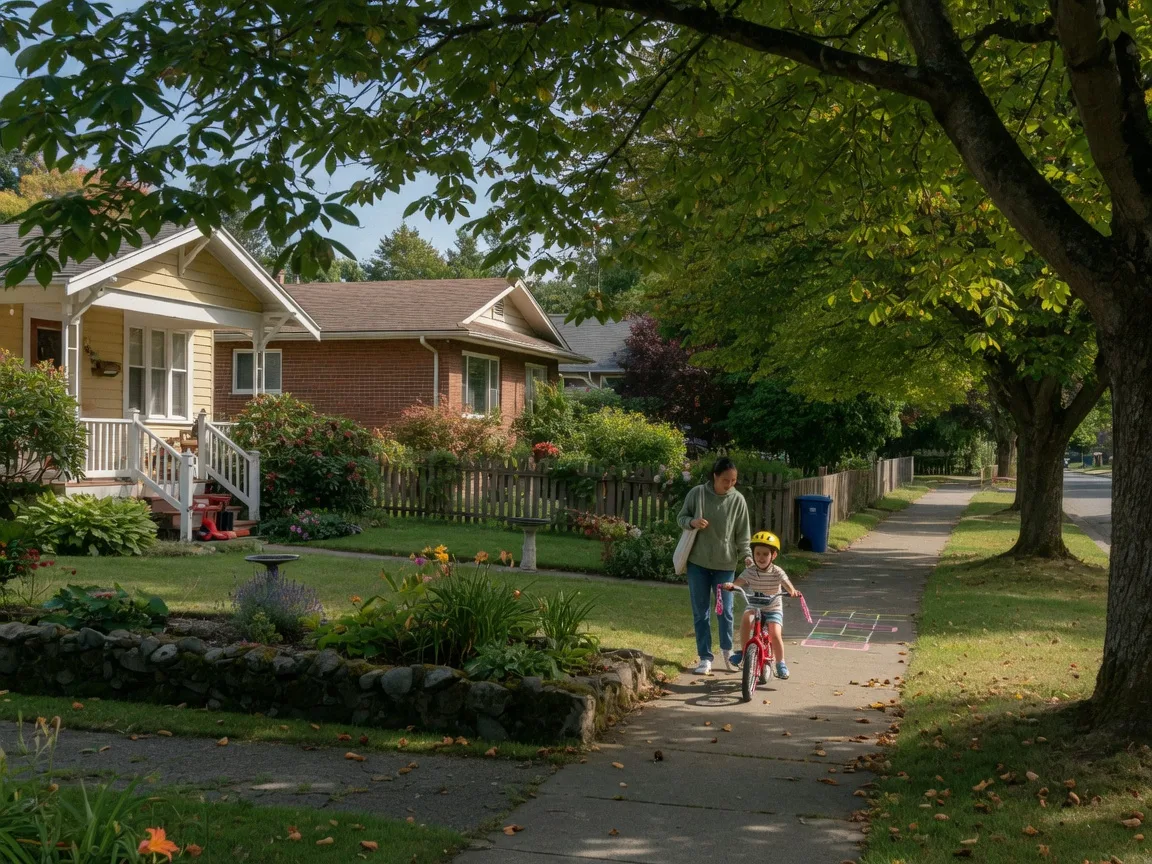
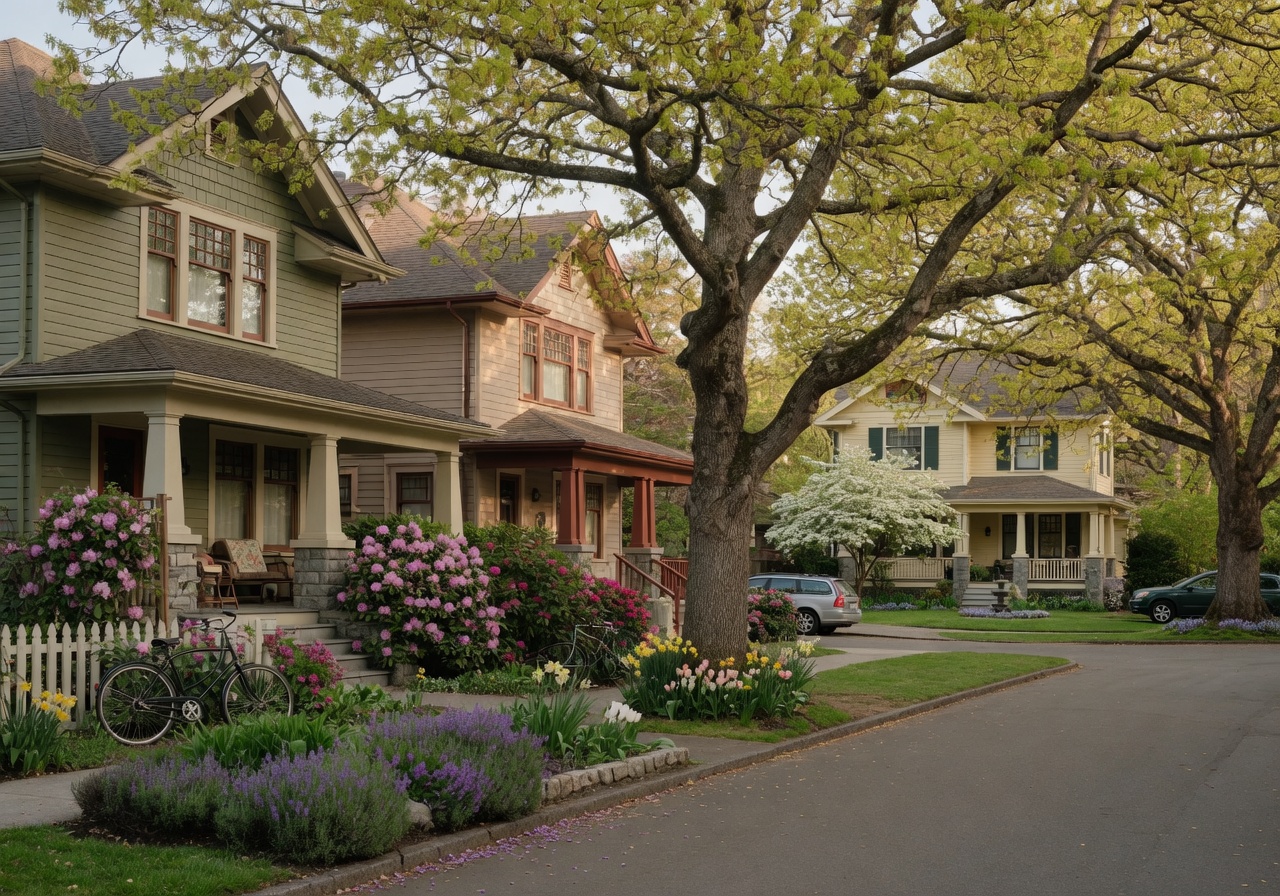
The same home can feel completely different on an arching-tree street in Saanich than on a new-build street in the West Shore. The personality is the point.
Step 3: Test-Drive It Like You Mean It
Reading is essential and insufficient. The real test is time spent in the area, and the gold standard for out-of-area buyers is renting in the neighbourhood first if your timing and budget allow. That is the single best money we see people spend on a move. If renting is off the table, do the next best things:
- Visit at different times of day. A neighbourhood at 11am on a Tuesday is a different place at 6pm on a Friday, and both versions are the one you would live in.
- Drive the commute in the rush it will actually see. Not on a long weekend at noon. The Colwood Crawl guide exists because this matters more than any other single factor on the West Shore.
- Walk the route your kids would take to school. With a child's stride, in the weather, and look at the crossings, not just the distance.
Step 4: Check the Boring Stuff
The charming stuff sells the dream; the boring stuff protects it. Run this list for every shortlisted area:
- School catchments. They change, and they matter. Our guide to whether catchments actually matter is the reality check every buyer should read once.
- Future development and official community plans. That green field beside the dream house may have a zoning application on it. Each municipality publishes its OCP and development applications, and twenty minutes of reading beats five years of surprise.
- Flood and tsunami hazard zones. Parts of Greater Victoria's shoreline carry real risk, and our tsunami and high-ground guide maps out what to know and where the safe high ground is.
- Transit, parking, and strata age. If the household runs on BC Transit, read how transit actually works here. If you are buying strata, the age and reserve fund of the building decide a lot about your future bills.
- Insurance. Older homes, proximity to brush, and suite use all change what coverage costs. Our home insurance guide walks through the local factors.
Step 5: Run the Real Numbers
Now that the shortlist is emotional and practical, force it through the calculator. Three numbers matter:
- The location premium. What the walkable address costs over the commuter one, month by month, versus what you would spend on gas, time, and car maintenance to bridge the gap. Sometimes the premium is worth it; sometimes it is a habit.
- Property tax differences. Municipalities in Greater Victoria are not identical at tax time, and the difference in mill rates changes the monthly carrying cost of the same-priced home. Ask for the actual current rate for each shortlisted address.
- Resale depth. When you leave, how many buyers will want this specific area? Central, classic, and coastal areas tend to hold deeper demand; very new or very remote pockets can take longer to sell. Our Victoria market stats page carries the wider market context.
If you are new to the region entirely, the living in Victoria overview ties the areas together, and our relocation reads for newcomers, from Vancouver and from Alberta, cover the arrival checklist. For the car-free or low-car versions of the dream, read commuting by bike and living along the Galloping Goose trail.
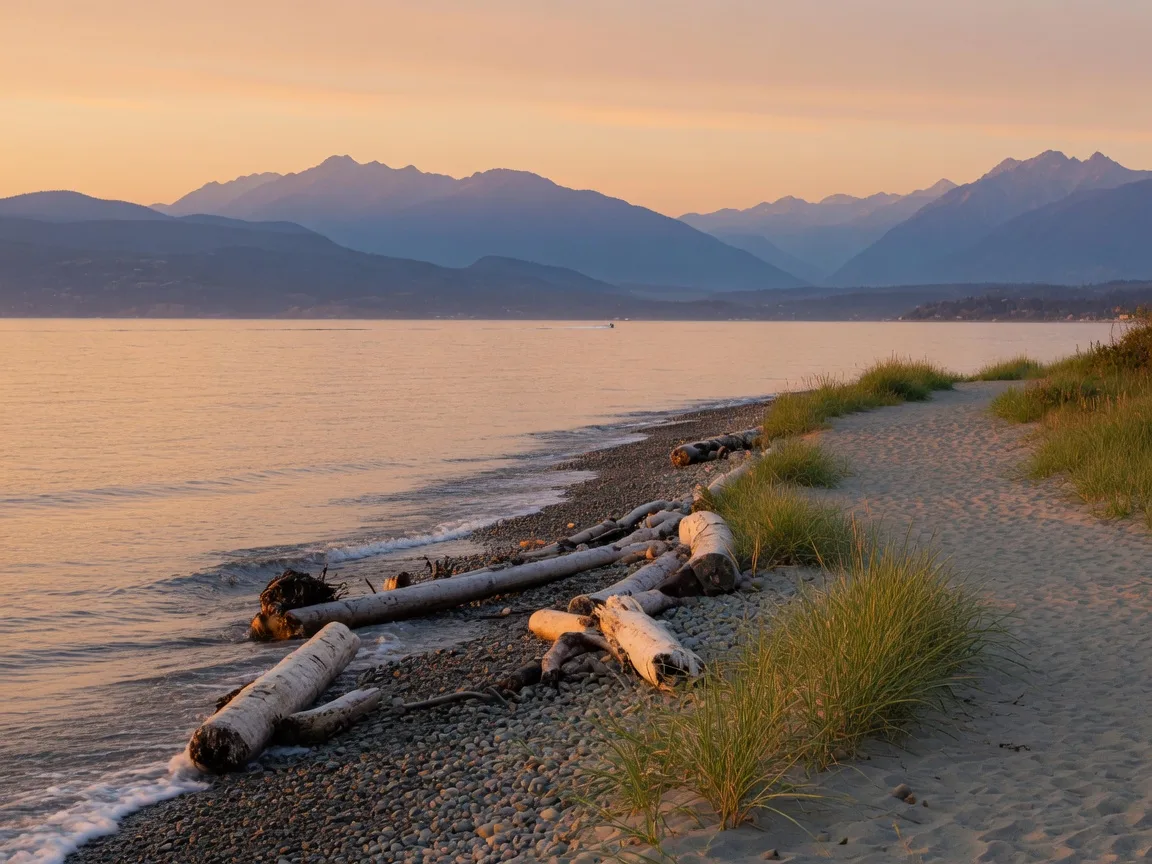
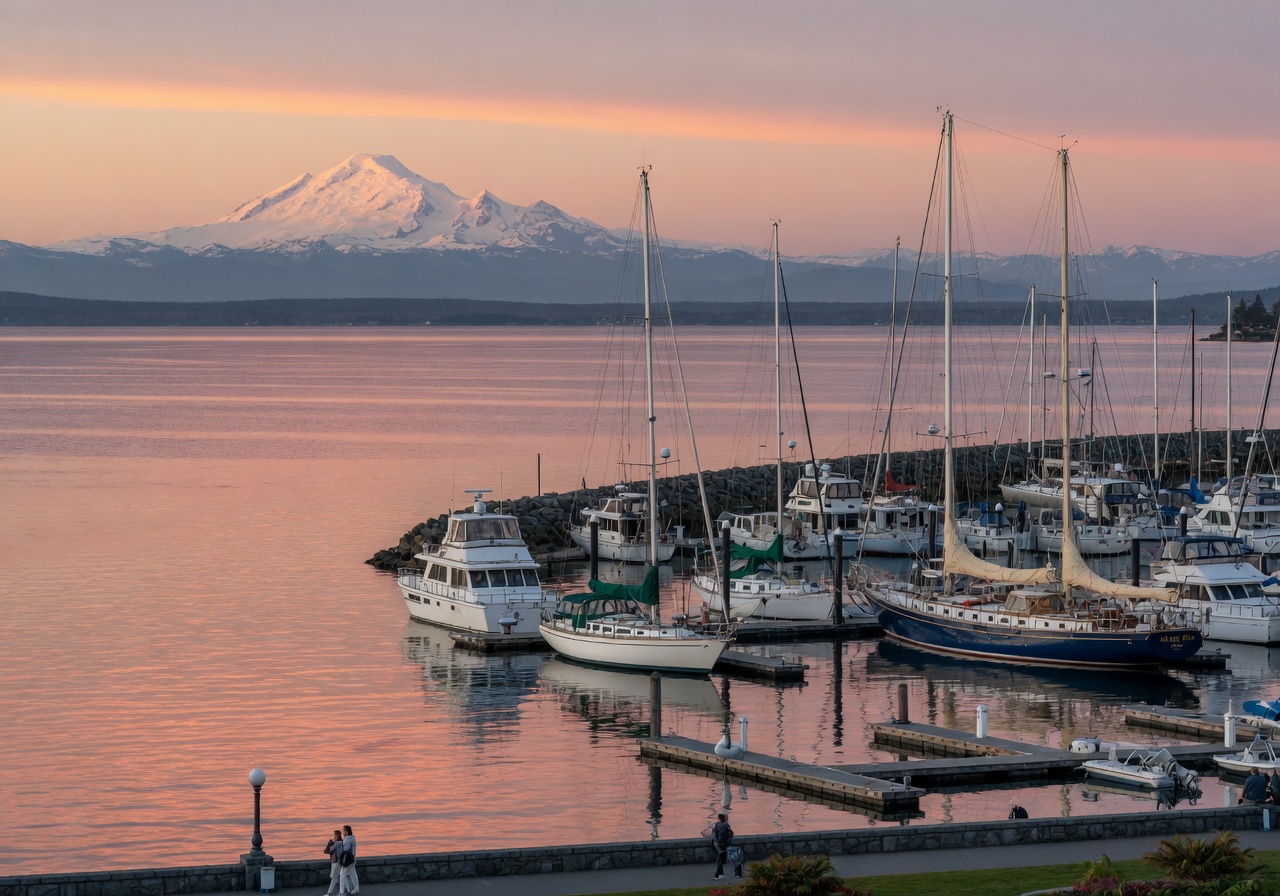
Coastal proximity is one of the strongest location drivers in Greater Victoria, and also one of the most expensive. Decide what it is worth to you, deliberately.
The Four Classic Location Mistakes
We have watched buyers make the same four mistakes for years, and we have made some of them ourselves:
- Buying on one sunny afternoon. Everywhere looks good in June sun. The neighbourhood you need to survive is the one in November rain.
- Skipping the rush-hour test. It is the most skipped, most regretted step on the list.
- Falling for one great house in the wrong place. A perfect kitchen cannot fix a commute you resent, and resale will remember the location before the granite.
- Assuming neighbourhoods stay frozen. They change, sometimes fast. The OCP reading in Step 4 is how you buy the future you want instead of being surprised by it.
The Other Three Home Wishes
Location connects to the other wishes we hear from Greater Victoria households more than people think. More space can come from choosing the right area instead of the biggest house. Outdoor space is often a location decision in disguise, because a great park two streets away behaves like a second backyard. And lower housing costs frequently arrive by relocating a few municipalities west. Choosing your location first makes every other wish easier to solve.
Let's Test-Drive the Shortlist Together
The best location decision we have ever helped a client make started with a list of neighbourhoods and a ninety-minute drive with no agenda. We have lived this decision ourselves, and we love walking it with clients: the commute runs, the coffee stops, the catchment talk, the honest numbers. Book a conversation through our calendar, reach out, or if you already own, start with a free home valuation to see what your current location is worth before you trade it.

About the Author
Anna Hakim & Perry Fanthorpe, Happy Homes Team
Anna Hakim and Perry Fanthorpe are AI Certified Agents helping people build lives on Southern Vancouver Island. Between them they have walked almost every street in Greater Victoria, which means the neighbourhood advice in our guides comes from boots on the ground, not brochure copy.