
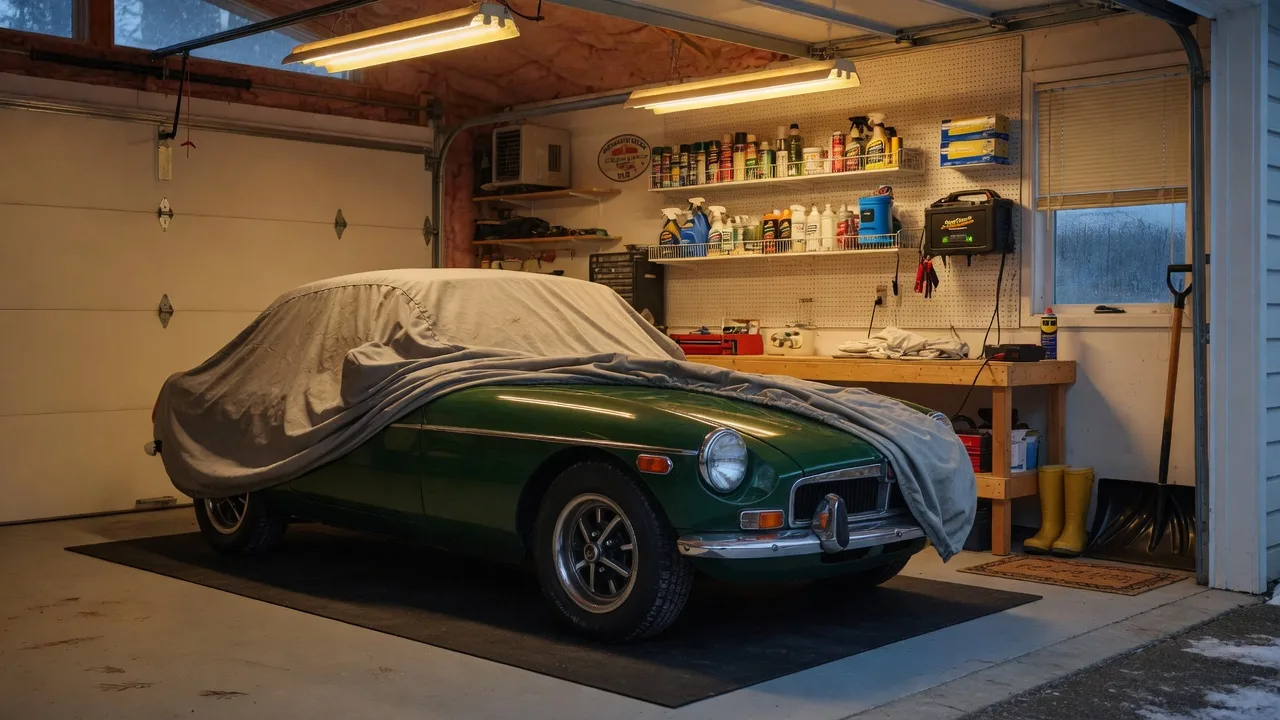
You have three real options for wintering a classic in Greater Victoria: your own garage, a self-storage unit, or a spot in a friend's heated shop through the car club network, and none of them is worth skipping. The danger here is not frost, it is damp, because our mild winters are wet and sea air plus a parked car equals corrosion, mould and a dead battery if you do not prep right. The local rhythm is simple: clean it, fluid it, lift the weight off the tires, cover it with something that breathes, and check on it once a month.
Why Does Winter Storage Matter More Here Than on the Prairies?
Everywhere else, winter storage is about ice and salt. Here it is about moisture. The island does not salt the roads like Ontario, but the air is full of salt spray near the shore, and a car that sits through our long wet season collects condensation in the fuel tank, the brake lines and every seam in the body. Our guide to how island cars corrode explains why a car that looks clean can still be rotting from the inside, and it is the reason locals are pickier than mainlanders about where a car sleeps.
The other local reality is that most collector cars only do the summer season anyway. With ICBC collector plates, your driving is limited to pleasure use, so parking the car from mid-October to April is not a choice, it is the normal rhythm of the hobby. The collector plate rules cover when you are even allowed to be on the road, which makes a proper winter storage routine part of owning the car at all.
What Is the Minimum Prep Before It Sits for Months?
The checklist is shorter than people expect, and it is the same list the club veterans will rattle off at the Sidney DQ on a Monday night. Wash the car and dry it thoroughly, including the undercarriage, because road grime left to sit is a rust accelerant. Change the oil before storage so the old acidic oil is not sitting against the bearings. Fill the fuel tank and add a fuel stabilizer, which stops the condensation problem and keeps the tank from rusting from the inside; opinions differ on stabilizer brands but not on running the engine after adding it so it reaches the fuel system.
Then the easy stuff: put the battery on a maintainer, not a plain charger, because a maintainer floats the charge and a charger can cook a battery flat over four months. Pump the tires up to the maximum sidewall pressure, or better, put the car on four jack stands so the tires and suspension do not take the load all winter. Tackle the rodents with traps in the corners, steel wool in the tailpipe, and anything else your garage mice have taught you to do, because an island garage is warm enough that mice call it home.
Where Do Locals Actually Park Their Cars for Winter?
The home garage is the answer for most people, and the reason the garage matters as much as the car. A dry, unheated garage on the lee side of the house beats a damp carport every time, and a garage with a power outlet for a battery maintainer is worth more than a bigger one without. The mistake newcomers make is throwing a plastic tarp over the car, which traps condensation against the paint; a fitted, breathable car cover, or even a cotton sheet, works better on the island.
If your home does not have the space, the city's self-storage operators are where the overflow goes. The main players around Victoria include Bluebird Self Storage with locations on Princess Avenue, Quadra Street and Johnson Street, Sentinel Storage at 3934 Quadra Street and in the Saanich core on Tolmie Lane, U-Lock Mini Storage on the Island Highway out toward Langford, The Self Storage Place on Mary Street in Vic West, and U-Haul's self-storage facilities on Queens Avenue and Topaz Avenue. Call each one before you book, because vehicle policies differ facility to facility: some do not allow vehicles inside units at all, most want proof of insurance, and you want to confirm the unit is drive-up accessible and has power available for a maintainer.
Garage or Storage Unit: What Should You Look For?
Whether you rent a unit or buy a house, the walkthrough checklist is the same. A power outlet at the car's spot, because a maintainer matters more than heat. A dry floor, because a garage that weeps water in the big storms will wreck a car faster than an outdoor parking spot. Security and access hours that work for your schedule, because you will come back monthly to check on it. And ventilation, because a sealed-tight unit in the wet season can be the dampest place on the property.
Heated storage is the luxury option and it is exactly as good as it sounds, but it is rarely the difference between a car surviving and not surviving an island winter. Dry beats warm. If a club friend has a heated shop and space, take it, and return the favour with beer and help. That is how the car scene works here, and the networking starts at the meets, not the dealership. Our club guide is the map to the people who have the barns and the gossip.
Should You Visit the Car During the Winter?
Yes, monthly at minimum, and the visit is more than a peek. Check tire pressure, look under the car for moisture and critters, and decide on your own starting policy. The locals are split on this one: some start the car every few weeks and let it warm up fully, others never touch it until spring. The honest middle ground is that a short cold start that never warms up is worse than not starting at all, because it dumps condensation into the exhaust. If you start it, drive it, at least around the block, so everything comes fully up to temperature.
On the coast, the real maintenance during storage is humidity management. A cracked-open window or a container of desiccant in the cabin handles the musty seats, and lifting the car off its suspension on stands keeps the tires and bushings honest. If the squeaks sound different in spring, it was probably not moisture, it was the four months of doing nothing, which is normal and usually gone after the first proper drive of May.
What Does Storage Have to Do with Buying a Home?
Everything, if you own the car, and this is where we cannot help seeing the world as realtors. The garage is a feature you are buying, not a bonus: a dry, powered, tall-enough garage for your project car is worth real money in this market, and an attached garage you can heat is worth more than a detached one you cannot. When you are choosing between homes, park your actual car in the actual garage at the viewing, because it is surprisingly common to find a garage that looks big and only fits a Civic.
And if you are in a condo or townhouse, read the strata rules before you fall for the underground parkade. Many strata bylaws restrict long-term vehicle storage, prohibit covered or inoperable cars in stalls, or have rules about car covers and maintainer cords. Our guide to what kind of home car enthusiasts actually need runs through the garage, shop and strata reality of every neighbourhood type, and the island classic car market guide makes the same point: here, the garage decides more than the car.
Next Steps: Book the Spot Before the Rain Sets In
Do not wait until a November storm is on the radio to find a storage spot. The good units and the garage spots go early, so book yours now, do the prep on a dry weekend, and cover the car. Then turn the downtime into social time: the winter car scene guide covers where the club nights happen once the shows close, and the Monday meet is the surest cure for winter cabin fever.
When your project outgrows the current garage, come find us, because we sell the garages. Book a call with Anna and Perry and tell us what needs to fit in the shop, and we will point you at the neighbourhoods in Greater Victoria where the acreage, the detached shop and the quiet road all come together.
Your Project Car Needs a Proper Home
Whether you need a heated attached garage, a detached shop with 220 power, or land to build both, we know which properties on the peninsula and the West Shore deliver.

About the Author
Anna Hakim & Perry Fanthorpe, Happy Homes Team
Anna Hakim and Perry Fanthorpe are AI Certified Agents helping people build lives on Southern Vancouver Island. Perry builds financial roots through mortgage helpers and investment strategy. Anna builds emotional roots through community and belonging.